Glass Houses
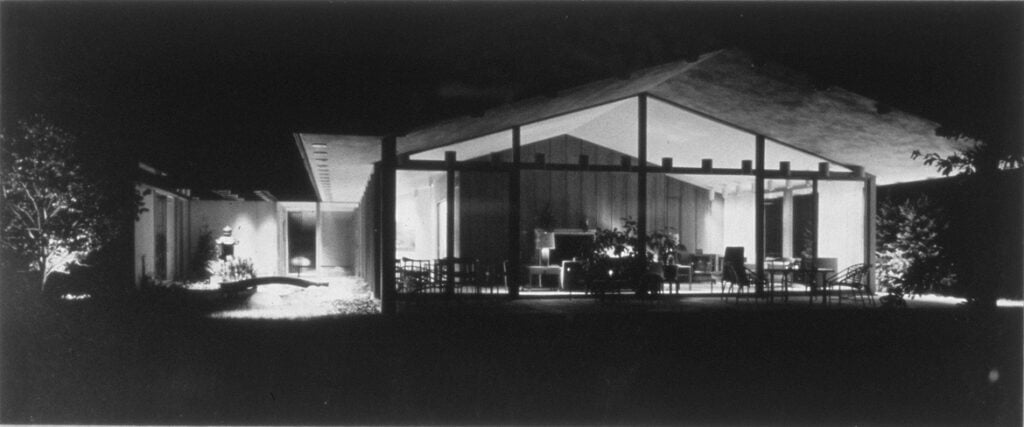
New Canaan, Connecticut, 1948 – 1949 Architect: Philip Johnson
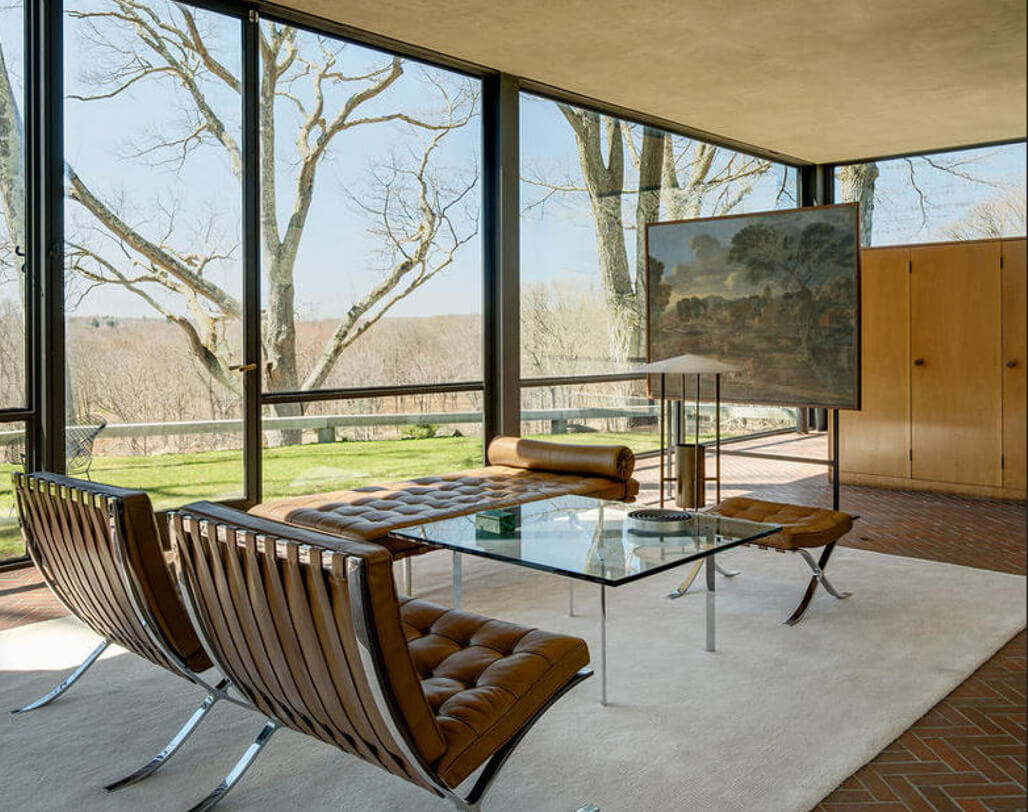
Philip Johnson’s Glass House
Philip Johnson described his success with using a conventional lighting technique on the inside of the glass house, “If you had one bulb, you saw six.” The challenge encountered in the illumination of this renowned residential space was to light a glass box in a way that considers light’s affect on interior materials and the psychology of its inhabitants. Kelly invented basic principles of interior and exterior lighting which he reapplied in numerous residences and commercial spaces that featured large expanses of glass such as picture windows and glass curtain walls. Philip Johnson once stated, “Richard founded the art of residential lighting the day he designed the lighting for the Glass House.”
Kelly understood the optical properties of glass and the modernist aesthetic which made broad use of it. It was transmissive in day and reflective at night. The methods that Kelly investigated followed the architect’s original intent for using glass — to extend space.
In the daytime, the penetration of daylight into the interior made the inside and outside visually continuous. At the same time, it created abrupt contrasts between brightness and shadow and wrenched the eye from one focus to another. The result was strain and fatigue. To reduce the problem of glare and to soften the contrast between outdoor brilliance and interior darkness, Kelly used dimmers to adjust the level of illumination so that the brightness of the interior wall surfaces balanced with the brightness of the exterior. He believed the use of blinds as a means to shield glare not only obstructs the outdoor view but eliminates the feeling of spaciousness the glass was supposed to create. A more innovative solution was Kelly’s use of a daytime south sun baffle which doubled as a nighttime indirect reflector.
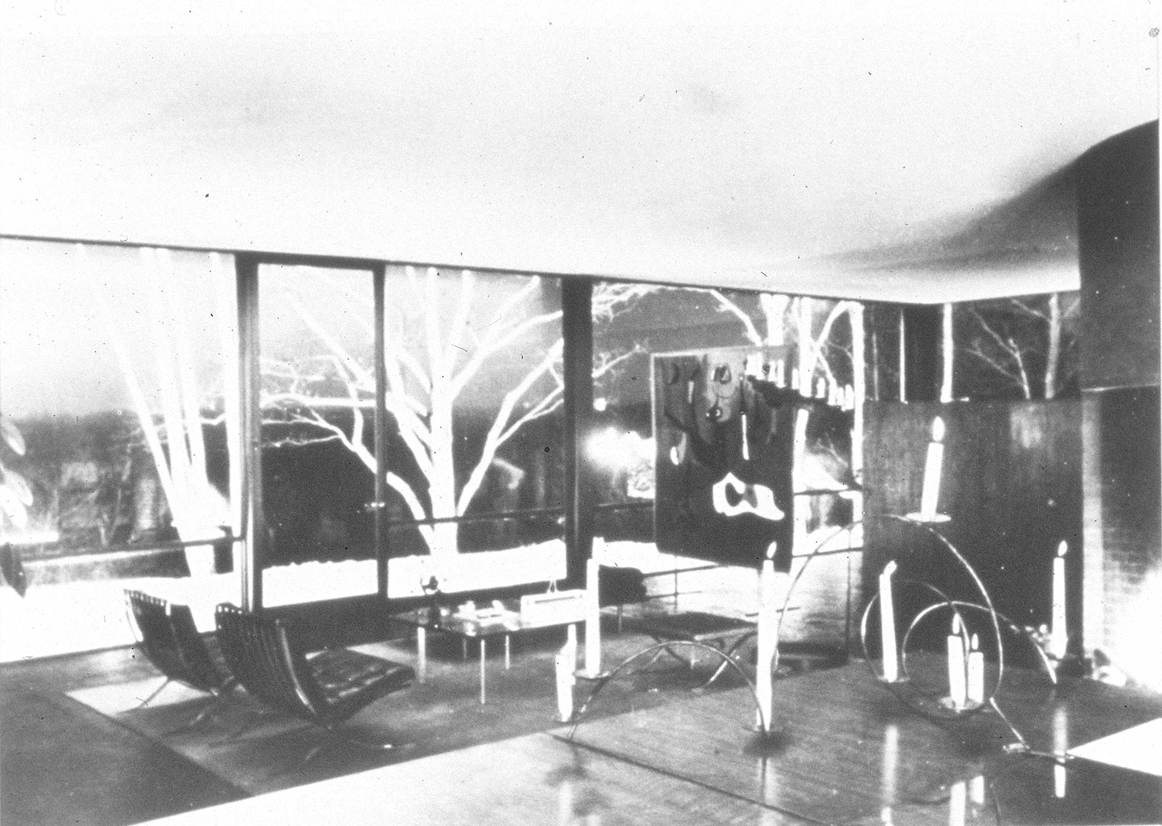
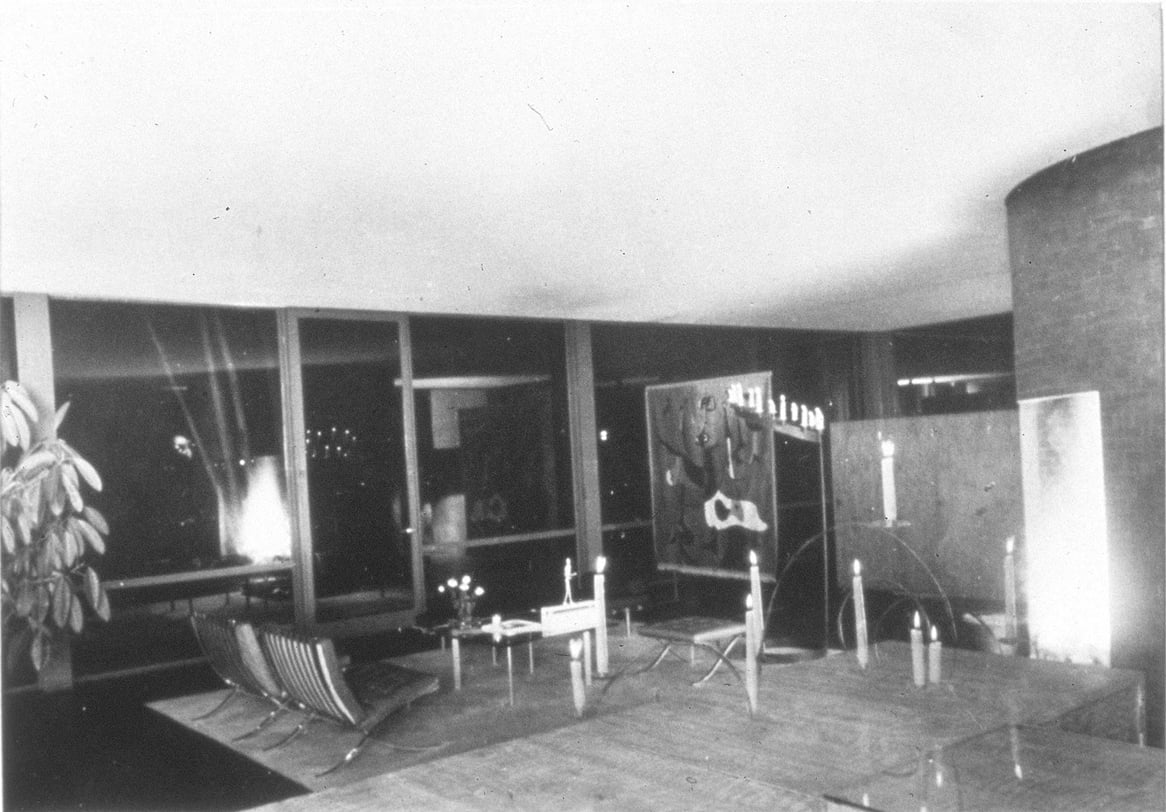
At night, the reflective property of glass, combined with the darkness beyond, created a black mirror effect. Multiple reflections on the inside face of the glass that were invisible during the day – of light sources, people, objects and the room itself – formed a barrier between inside and outside at night. “The glass inside becomes a solid black mirror bleakly reflecting all indoor light, giving a feeling of insecurity to people because they still know that anyone outside can see in though they cannot see out, thus completely defeating the purpose of using glass at all.” Kelly’s solution was to provide a sufficient level of illumination to the exterior surrounds and establish various lines of distance. In order to make the distance visible, he lighted trees, shrubbery, and elements of the natural landscape. “When the surroundings outside are beautifully illuminated the glass house has much more than a landscape wallpaper because of depth, changing perspectives, etc.”